
Fly to Veer Savarkar airport (IXZ), Sri Vijaya Puram...
سيارات أجرة سياحية وجيبات مشتركة
شبكتا Airtel وJio 4G متوفرتان
أجهزة صراف آلي متوفرة في سوق البلدة
اكتشف History Of The Andaman Islands
The Andaman Islands carry one of the longest and most layered histories in the Indian Ocean - from indigenous communities who have lived here for tens of thousands of years, through a British penal settlement, a Japanese occupation and a tsunami, to the Union Territory travellers visit today.
Who lived here first
Six indigenous groups are recognised across the islands: the Great Andamanese, Onge, Jarawa and Sentinelese in the Andamans, and the Nicobarese and Shompen in the Nicobars. Five are classified as Particularly Vulnerable Tribal Groups. Their reserves are protected by the A&N (Protection of Aboriginal Tribes) Regulation, 1956 - entering them, interacting with residents or photographing them is illegal.
The first European settlements
Lt Archibald Blair surveyed the islands in 1788-89 and founded a settlement on Chatham Island in 1789, in the harbour that later carried his name. It moved to Port Cornwallis in North Andaman in 1792 and was abandoned in 1796 after disease. Denmark had already colonised the Nicobars from 1 January 1756 and sold its rights to Britain on 16 October 1868; the Danes never ruled the Andamans.
Kala Pani and the penal settlement
After the 1857 uprising the British needed a remote place to exile rebels. Capt. H. Man raised the Union Jack at Port Blair in January 1858, and on 10 March 1858 Dr James Pattison Walker landed with about 200 convicts. The Cellular Jail was built between 1896 and 1906. In May 1859 several hundred Great Andamanese warriors attacked the settlement at Aberdeen and were defeated by firearms, a clash commemorated on 17 May as the Battle of Aberdeen. In 1872 Viceroy Lord Mayo was stabbed by convict Sher Ali Afridi at Hope Town jetty, the only Viceroy of India killed in office.
War, independence and after
Japanese forces landed at Port Blair on 23 March 1942 and held the islands until October 1945. Netaji Subhas Chandra Bose visited on 29-31 December 1943 and hoisted the tricolour on 30 December. The islands joined independent India in 1947 and became a Union Territory on 1 November 1956. The Cellular Jail was declared a National Memorial on 11 February 1979. The earthquake and tsunami of 26 December 2004 killed at least 1,310 people officially, with about 5,600 missing, mostly in the Nicobars.
The names on today’s map
On 30 December 2018 Havelock became Swaraj Dweep, Neil became Shaheed Dweep and Ross became Netaji Subhas Chandra Bose Dweep. Mount Harriet became Mount Manipur in 2021. Port Blair became Sri Vijaya Puram on 13 September 2024, recalling the Chola naval campaign against Srivijaya. In January 2023 the 21 largest previously unnamed islands were named after India’s 21 Param Vir Chakra recipients. Both old and new names are still in everyday use on tickets and signage.
Where to see this history
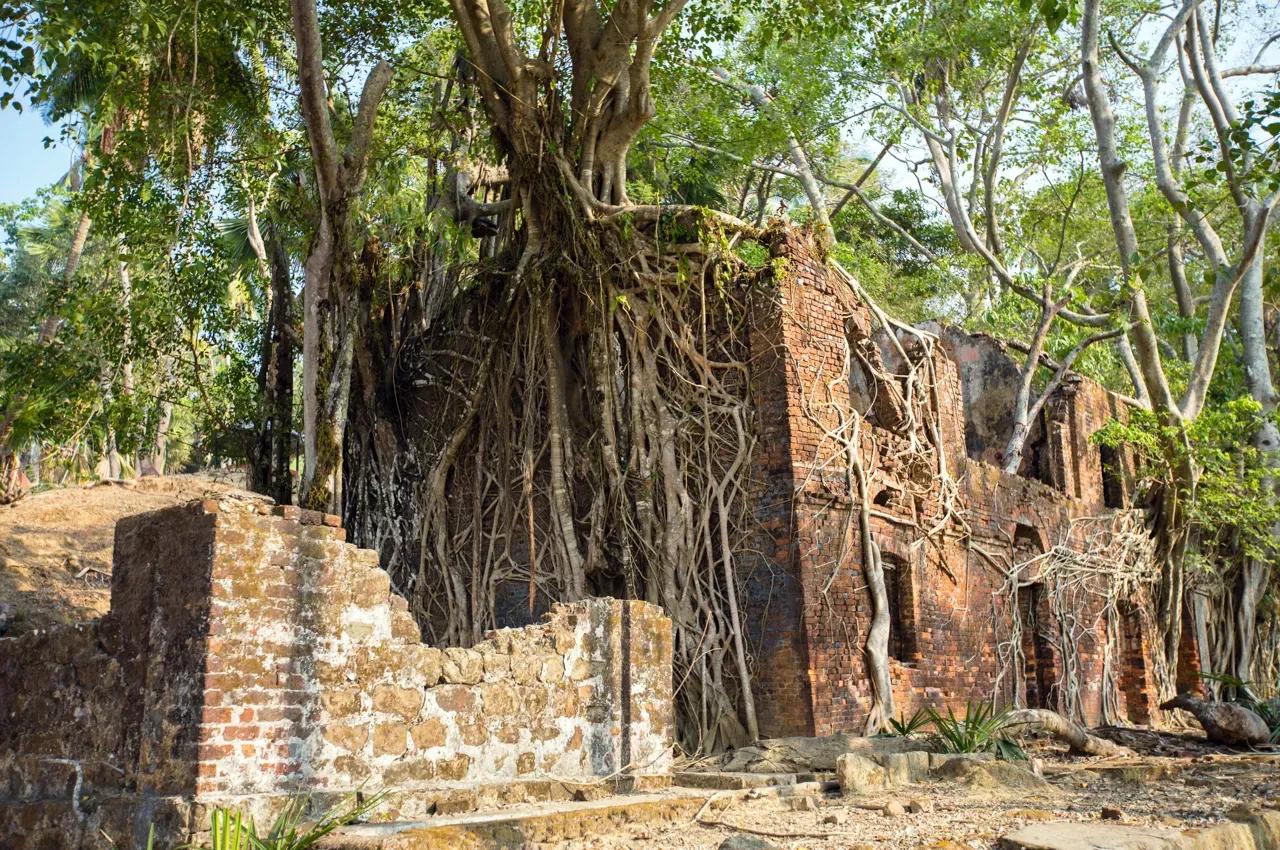
Almost all of it is within reach of Sri Vijaya Puram (Port Blair): the Cellular Jail and its evening light and sound show, Ross Island, Viper Island, Chatham Saw Mill, the Japanese bunkers along the coast, Mount Manipur, and the Samudrika and Anthropological museums in town.
لقطات من الجزيرة
هل تحتاج مساعدة في تخطيط رحلتك إلى History Of The Andaman Islands?
يقيم متخصصو الجزر لدينا في بورت بلير وهافلوك. ننسّق حجوزات العبّارات والتوصيل إلى الفنادق ومدرّبي الغوص المعتمدين وبرامج خاصة مخصصة تناسب تواريخك.
تابع Adventigo على بحث Google
أضف Adventigo كمصدر مفضّل لتظهر أدلة السفر إلى جزر أندامان وجداول العبّارات والنصائح المحلية لدينا في أولوية بحث Google ونظرات AI العامة.
الأسئلة الشائعة
Who are the original inhabitants of the Andaman Islands?
Six indigenous groups: the Great Andamanese, Onge, Jarawa and Sentinelese in the Andamans, and the Nicobarese and Shompen in the Nicobars. Five are Particularly Vulnerable Tribal Groups. Their reserves are protected by the A&N (Protection of Aboriginal Tribes) Regulation, 1956; entering them, interacting or photographing is illegal.
Where does the name Andaman come from?
Ptolemy (2nd century CE) called the islands "Agadaemon"; Marco Polo wrote of "Angamanain" in the 13th century. A popular tradition links the name to "Handuman" (Hanuman), but that is folk etymology, not established fact. The Chola Tanjore inscription of about 1050 CE calls the Nicobars "Ma-Nakkavaram".
When did the British first settle in the Andamans?
Lt Archibald Blair surveyed the islands in 1788-89 and set up a settlement on Chatham Island in 1789, in the harbour later named Port Blair. It moved to North Andaman (Port Cornwallis) in 1792 and was abandoned in 1796 because of disease.
Why did the British set up a penal colony in the Andamans?
After the 1857 uprising, the British needed a remote place to exile rebels. Capt. H. Man raised the Union Jack at Port Blair in January 1858, and on 10 March 1858 Dr James Pattison Walker arrived with about 200 convicts - the start of the penal settlement that later built the Cellular Jail.
What was the Battle of Aberdeen?
In May 1859 several hundred Great Andamanese warriors attacked the British settlement at Aberdeen, Port Blair, and were defeated by firearms; an escaped convict, Dudhnath Tewari, had warned the British. It is commemorated on 17 May (official pages also give 14 May), with a memorial near Rajiv Gandhi Water Sports Complex.
Which Viceroy was assassinated in the Andamans?
Viceroy Lord Mayo was stabbed by convict Sher Ali Afridi at Hope Town jetty, below Mount Harriet, on 8 February 1872 - the only Viceroy of India killed in office. Sher Ali was hanged on Viper Island on 11 March 1872.
What happened in the Andamans during World War II?
Japanese forces landed at Port Blair on 23 March 1942 and occupied the islands until October 1945, with heavy loss of local lives. Netaji Subhas Chandra Bose visited on 29-31 December 1943 and hoisted the tricolour on 30 December; the islands were nominally handed to the Azad Hind government. Japanese forces surrendered at Port Blair in October 1945.
When did Andaman become part of India and a Union Territory?
The islands became part of independent India in 1947 and a Union Territory on 1 November 1956. Refugee families from East Pakistan were settled from 1949, later joined by ex-servicemen and repatriates from Sri Lanka and Burma. Today the UT has three districts and is run by a Lieutenant Governor.
How did the 2004 tsunami affect the Andaman and Nicobar Islands?
The 26 December 2004 earthquake (magnitude about 9.1) and tsunami killed at least 1,310 people officially, with about 5,600 missing, mostly in the Nicobars; Car Nicobar air base lost 111 personnel and family members. North Andaman was uplifted while the south subsided - Indira Point sank about 4 m.
Why were Port Blair, Havelock, Neil and Ross Island renamed?
On 30 December 2018, the 75th anniversary of Netaji's flag hoisting, Havelock became Swaraj Dweep, Neil became Shaheed Dweep and Ross became Netaji Subhas Chandra Bose Dweep - echoing names Netaji proposed in 1943. Mount Harriet became Mount Manipur in 2021, and Port Blair became Sri Vijaya Puram on 13 September 2024, recalling the Chola naval campaign against Srivijaya.
Which islands were named after Param Vir Chakra awardees?
On 23 January 2023, Parakram Diwas, the 21 largest previously unnamed islands of the UT were named after India's 21 Param Vir Chakra recipients - the largest after Major Somnath Sharma, the first awardee. These islands are not open to tourists.
What is the Andaman and Nicobar Command?
India's first and only tri-service (Army, Navy, Air Force) theatre command, raised in October 2001 with its headquarters in Sri Vijaya Puram. Its commander-in-chief rotates among the three services.
Did the Danes rule the Nicobar Islands?
Yes - Denmark set up a colony in the Nicobars on 1 January 1756 (an Austrian attempt followed in 1778-84) and sold its rights to Britain on 16 October 1868. The Andaman and Nicobar groups were united under one Chief Commissioner at Port Blair in 1872. The Danes never ruled the Andamans.
What is the history of the Andaman Islands?
The British settled at Chatham in 1789 and opened a penal settlement in 1858. The Cellular Jail was built in 1896-1906, Japan occupied the islands in 1942-45, and they became a Union Territory in 1956. Timeline: 1789 Blair's Chatham settlement - 1858 penal settlement - 1859 Battle of Aberdeen - 1872 Lord Mayo assassinated - 1896-1906 Cellular Jail built - 1941 earthquake - 1942-45 Japanese occupation - 30 Dec 1943 Netaji hoists the tricolour - 1956 Union Territory - 1979 Cellular Jail National Memorial - 2004 tsunami - 2018 island renames - 2024 Sri Vijaya Puram.